
What Do You Actually Do During an Elopement Day?
One of the most common questions couples ask when they start thinking about eloping is a simple one.
If I ask you to imagine a wedding day, you already know the script, right? There’s a venue, a schedule, a timeline full of moments everyone recognizes. Even if the details change, most people have a rough idea of how the day unfolds.
When couples first start thinking about them, the idea often feels right before the logistics are fully clear. You might know you want something smaller, quieter, or more personal. But the actual shape of the day is still fuzzy.
And that’s totally OK. I’m here to help, so let’s start is with a slightly different question.
What would you do if your wedding wasn’t being photographed?
If no one was documenting the day, what would you want to spend it doing?
Would you go hiking somewhere beautiful?
Drive to the coast and watch the waves for a while?
Take a ferry out to an island?
Ski in the morning before saying your vows?
Once you start answering that question honestly, the outline of an elopement day begins to appear.
The photographs come afterward. My job isn’t to invent a day for you. It’s to help you shape a day that already feels right and then document it in a way that lets you relive it later.
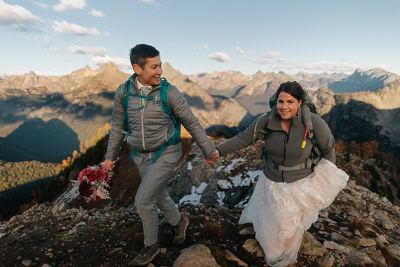
What Couples Actually Do on an Elopement Day
Once the ceremony is over, the day keeps going.
And this is where an elopement day often starts to feel very different from a traditional wedding.
Instead of moving quickly from one event to the next, you have the freedom to spend the day doing things you actually enjoy together.
Sometimes couples already know exactly what they want to do. Other times it helps to brainstorm a little.
But, if you’re not sure what to do, I made a little tool here to help come up with some ideas:
Random Elopement Idea Generator
Need a little inspiration? Click the button and imagine what your day could look like.
Here are just a few ways couples choose to spend their elopement day.
Outdoor ideas
• Hiking to a second viewpoint after the ceremony
• Watching the sunrise from a mountain overlook
• Exploring tide pools along the coast
• Kayaking on an alpine lake
• Skiing or snowshoeing in the winter
• Wandering through wildflower meadows
• Taking a slow walk through an old forest trail
• Sitting on a rocky beach listening to the waves
Relaxed celebration ideas
• Opening a bottle of champagne after your vows
• Sharing a picnic somewhere quiet
• Having a private chef cook dinner at a cabin
• Meeting a few close friends for a meal afterward
• Toasting with your favorite local beer
• Reading letters from family or friends
• Dancing together somewhere beautiful with a small speaker

Little moments that make the day memorable
• Writing your vows together that morning
• Taking a quiet moment after the ceremony to breathe and look around
• Watching the sunset before heading back to town
• Driving a scenic road just to see where it goes
• Stopping at a roadside diner on the way home
• Sitting around a campfire after dark
Some couples spend their elopement day hiking for hours.
Others keep things simple and stay close to one beautiful spot.
There isn’t a single way to do it right.
The point is that the day reflects the things you actually enjoy doing together.
Embracing the Adventure (Especially When Eloping in Washington)
If you’re eloping in Washington, there’s one thing worth remembering while planning your day.
The weather has a personality.
Most of the time it cooperates beautifully. Summer mornings in the mountains can be incredibly clear. Winter days often bring the snow people hope for.
But nature doesn’t always follow the forecast.
A February day might be sunny instead of snowy.
An August afternoon might bring a surprise rainstorm.
Sometimes the weather shifts entirely a few days before the wedding.
That uncertainty is part of the adventure.
The goal isn’t to eliminate it. It’s to plan well enough that you can embrace whatever the day brings.
One practical thing I often recommend to couples traveling here is building a little flexibility into the trip. If you’re flying to Washington for your elopement, consider giving yourselves an extra day on either side of the ceremony if possible.
Most couples never need to change plans.
But if a big storm rolls through or conditions suddenly shift, having that extra day can give us options. Instead of being stuck with whatever the weather decides that morning, we can adjust and choose the best moment.
Even when things don’t go exactly according to plan, the day often ends up being memorable in ways you couldn’t have predicted.
Fog rolling across the coast.
Fresh snow overnight in the mountains.
A sudden clearing in the clouds just before sunset.
Those moments are part of what makes an elopement day feel like an adventure instead of a production.

Traditions Aren’t the Enemy
Elopements sometimes get framed as a rejection of traditional weddings.
You’ve probably seen the language before.
“We just wanted to do our own thing.”
“We didn’t want any of the traditional stuff.”
There’s nothing wrong with that perspective, but it’s also worth remembering something simple.
Wedding traditions exist for a reason.
Many of them have been around for hundreds or even thousands of years. They’ve lasted because people found meaning in them. Sharing vows in front of a community, gathering people for a meal, marking the beginning of a marriage with ceremony. These ideas resonate with a lot of couples.
If those traditions feel meaningful to you, embrace them.
And if they don’t, you don’t have to include them.
One of the advantages of an elopement is that it gives you the space to choose intentionally. You’re not rejecting tradition for the sake of rejecting it. You’re deciding which pieces matter to you and leaving the rest behind.
The Ceremony Can Be Simple. But It Should Still Feel Meaningful.
A lot of couples initially downplay the ceremony when they start planning an elopement.
“We just want to say our vows quickly.”
“We’re not really ceremony people.”
That instinct usually comes from not wanting things to feel performative or overly formal. And that’s fair.
But the ceremony is still the moment where you actually get married. Even if it’s simple, it deserves to feel intentional.
That might mean writing personal vows. It might mean standing somewhere meaningful and taking a minute before you say anything at all.
One thing I often tell couples during the ceremony is to pause.
Take a breath.
Look around.
Notice where you are.
You’re only here once. Remember all you can.
You’ll only stand in that place once as the two people getting married that day. Taking a moment to actually experience it tends to make the whole day feel more real.
A quick note about officiants
I’m also an officiant in Washington. That means if you’re eloping here and want something simple, I can help take care of the legal side while still keeping the ceremony personal.
Some couples want a traditional officiant guiding the ceremony. Others prefer to exchange vows privately and just need someone to make the marriage official afterward.
Either approach works.
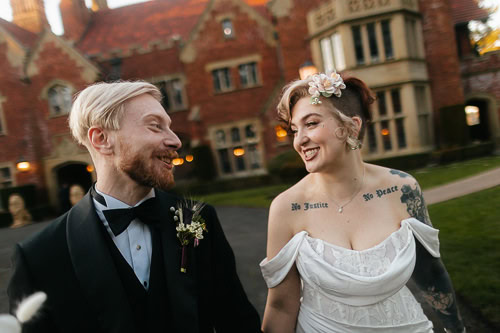
How an Elopement Timeline Usually Works
Once couples start imagining what they want to do on their elopement day, the next practical question is usually about timing.
How does the day actually unfold?
Most elopement timelines tend to center around sunrise or sunset. Part of that is atmosphere. Early mornings and late evenings are often quieter, and the light tends to be softer and more dramatic.
If beautiful landscape photos are part of the vision for your elopement, those times of day usually give us the best conditions.
But that doesn’t mean every elopement has to happen at dawn or dusk.
A middle-of-the-day ceremony can be wonderful too, especially if the focus of the day is simply spending time together somewhere meaningful.
What matters more than the exact hour is understanding the rhythm of the day.
Even simple elopements involve a little effort. You might be waking up early, driving to a trailhead in the dark, or walking along a beach with headlamps before the sun comes up. If you’re hiking to a viewpoint in the North Cascades or finding a quiet spot near Mount Rainier, there’s usually a small adventure involved.
That effort is part of what makes the day memorable.
The goal of a good elopement timeline isn’t to pack the day with activities. It’s to give you enough structure that things flow smoothly while still leaving space to slow down and enjoy where you are.
The Next Step: Shaping the Day
Once couples start imagining what they might actually want to do during their elopement day, the next question usually becomes more practical.
How do you turn those ideas into a timeline that still feels relaxed?
How early do you need to start if you want a sunrise ceremony?
How much time should you plan between locations?
What does a realistic elopement day actually look like from start to finish?
That’s exactly what we’ll explore next.
In the next guide, we’ll walk through how to build a relaxed elopement timeline that gives your day enough structure to flow smoothly while still leaving room to slow down and enjoy where you are.


